

Find a Biological Parent or Relative
Combine DNA evidence and genealogical research to identify unknown biological parents, grandparents, and other family connections.
DNA can provide a path to identifying biological family even when traditional records contain little or no information about the relationship. By analyzing DNA matches, grouping related matches, and reconstructing the family trees connecting them, it is often possible to narrow the possibilities to a particular family or individual.
This service combines genetic genealogy with traditional record research to investigate unknown parentage and other biological relationships, carefully following the available evidence before reaching a conclusion.
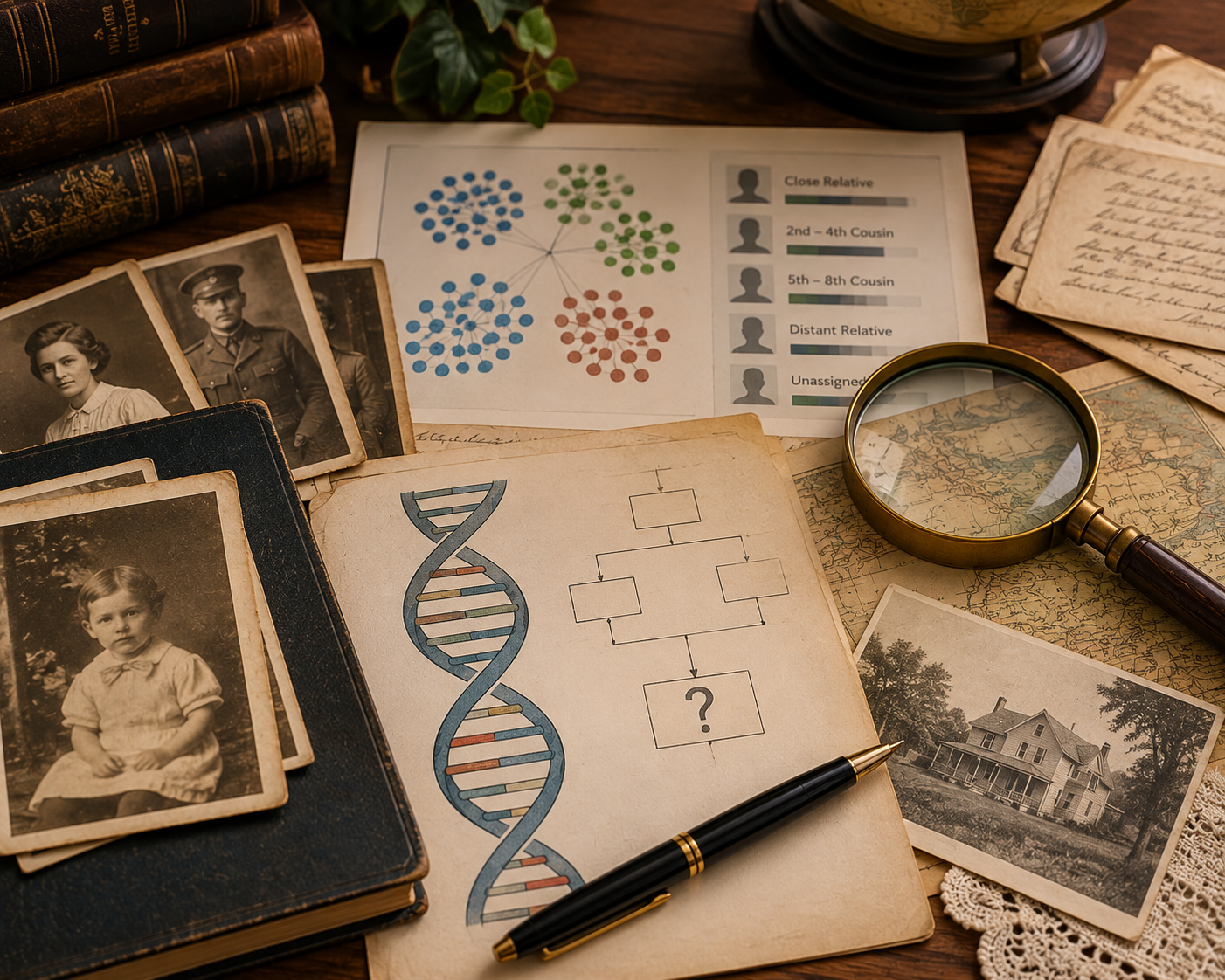
What This Service Can Help You Discover
DNA matches can provide the clues needed to identify biological family connections even when names are unknown or traditional records provide few answers. By combining DNA evidence with family-tree reconstruction and historical records, I can investigate how your matches connect and where an unknown relative may fit within your family.
Identify a Biological Parent
Use DNA matches, shared-match patterns, family trees, and genealogical records to investigate the identity of an unknown biological mother or father.
Identify an Unknown Grandparent
Trace DNA match groups and reconstruct family lines to investigate an unknown or uncertain biological grandparent and the family from which they came.
Find Other Biological Relatives
Investigate unknown siblings, half-siblings, extended relatives, or other biological connections revealed through DNA testing and genealogical research.
What’s Included in Your Biological Family Research
Your project begins with your DNA results, known family information, and the biological relationship you are trying to identify. I combine DNA analysis with traditional genealogical research to investigate the families connected to your matches and determine where the unknown relationship may fit.
Research
DNA Match Analysis
Analysis of relevant DNA matches, shared matches, relationship estimates, and match patterns connected to the unknown biological relationship.
Match Grouping & Family Reconstruction
Relevant matches are grouped into family lines, and their family trees are researched and reconstructed to identify common ancestors and potential biological connections.
Genealogical Record Research
Historical and contemporary genealogical records are used to verify identities, relationships, locations, ages, and other evidence needed to evaluate potential candidates.
What You Receive
Biological Family Findings
A clear explanation of the family lines, relationships, and potential or identified biological relatives supported by the research.
Supporting Evidence & Sources
Relevant DNA evidence, genealogical records, reconstructed family-tree information, and source citations supporting the findings.
Written Research Summary
A documented explanation of the research performed, evidence evaluated, conclusions that can reasonably be supported, unresolved questions, and recommended next steps when appropriate.
How the Research Process Works
1
Tell Me What You’re Trying to Discover
Complete the Biological Family Research Intake with what you know about the unknown relationship, your DNA testing, known family information, and any previous research.
2
I Review Your Project
I review your information and DNA results to determine whether the available evidence can reasonably address your question, along with the appropriate scope of work and project cost.
3
Research Begins
Once approved, I analyze DNA matches, group related matches, reconstruct family trees, and research genealogical records to identify and evaluate possible biological connections.
4
Receive Your Findings
You receive documented findings explaining the DNA and genealogical evidence, the relationships identified or narrowed through the research, supporting sources, and recommended next steps when appropriate.
See What You'll Receive
Before starting your project, you can view a sample family-history research report to see how findings, records, sources, evidence, and conclusions are presented.
Ready to Find Your Biological Family?
Tell me what you know about the unknown relationship and the DNA testing you have completed. I’ll review your information and determine the best approach for investigating your biological family connection.