

Explore the Research Library
Explore detailed guides to different types of family history research, the records and evidence that may be used, and the kinds of questions professional genealogy research can help investigate.
Building and Documenting Your Family Tree
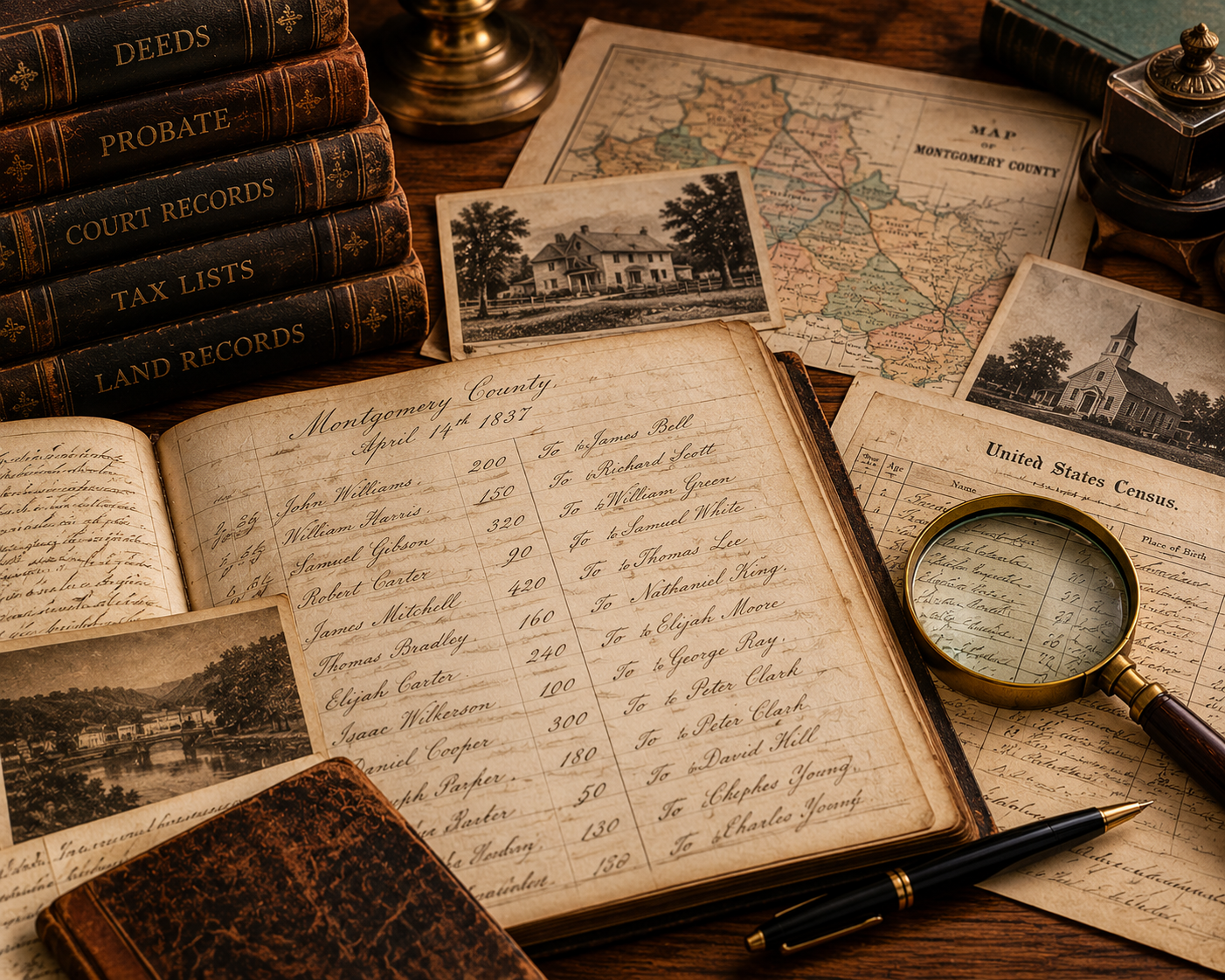
Discover how professional genealogical research can expand your family tree beyond names and dates. Historical records can establish relationships, identify previous generations, resolve conflicting information, and document where your ancestors lived and how their families developed over time.
Investigating Difficult Ancestors and Family Mysteries
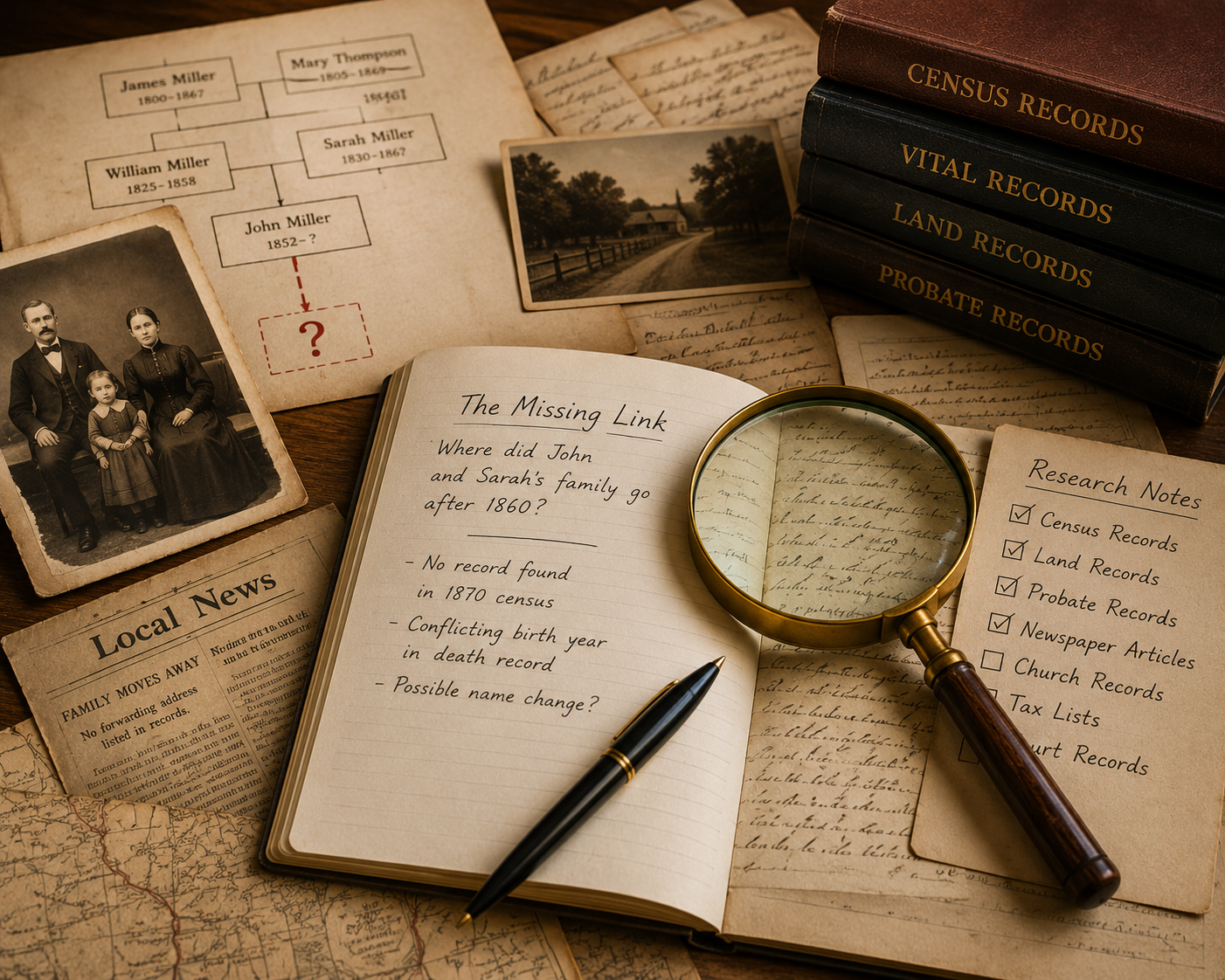
Some family history questions don't have an obvious answer. Missing records, conflicting information, unexplained relationships, name changes, and ancestors who seem to disappear can require research across multiple sources.
Learn how genealogical evidence can be compared and analyzed to investigate difficult questions and uncover new clues about your family's past.
Discovering an Ancestor’s Military Service
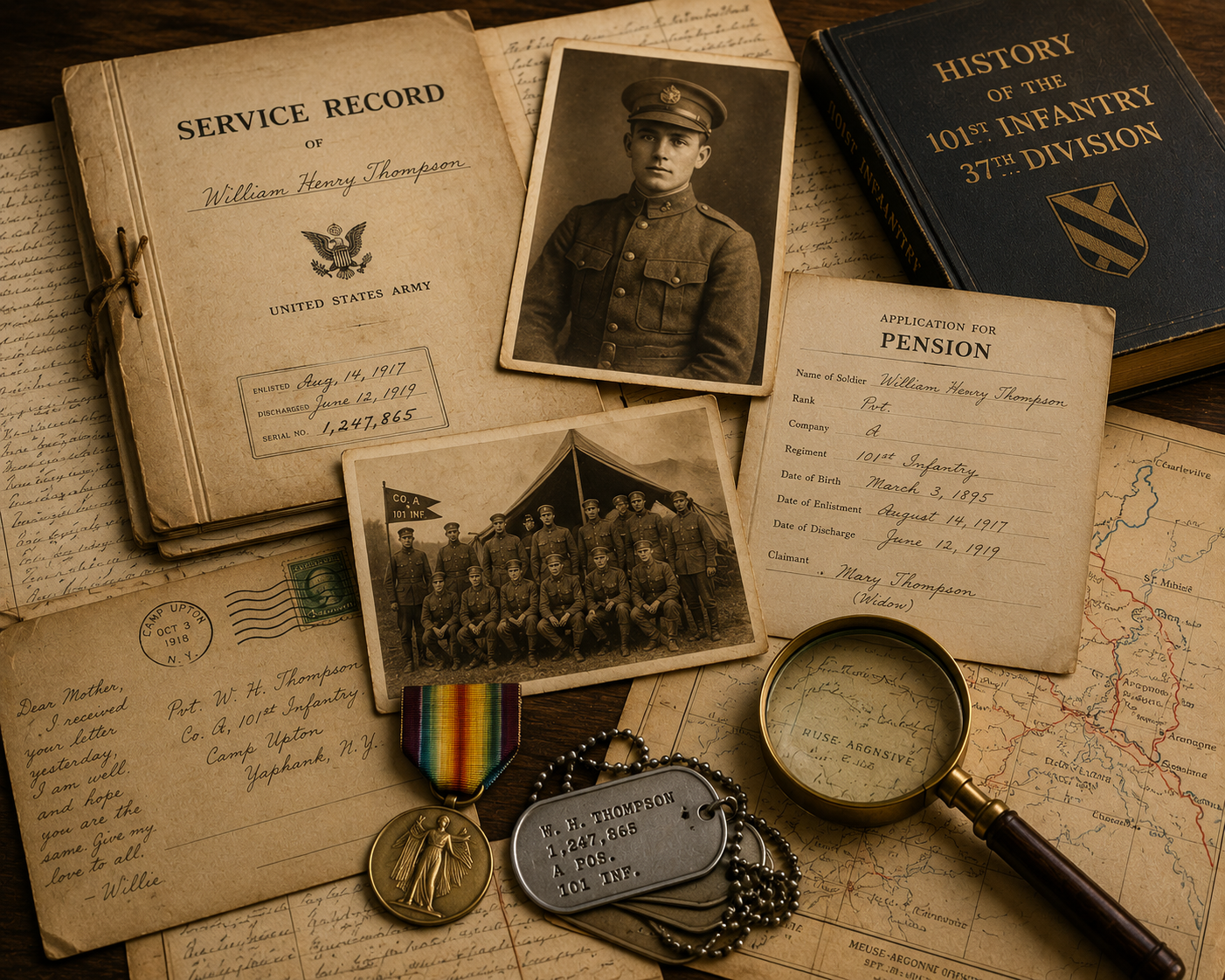
Military service can leave behind records that reveal far more than dates of enlistment and discharge. Service records, pension files, unit histories, draft registrations, casualty records, and other sources can help reconstruct an ancestor’s experience and place it within its historical context.
Learn how military and genealogical records can be combined to document the story of an ancestor who served.
Using DNA to Explore Family Relationships
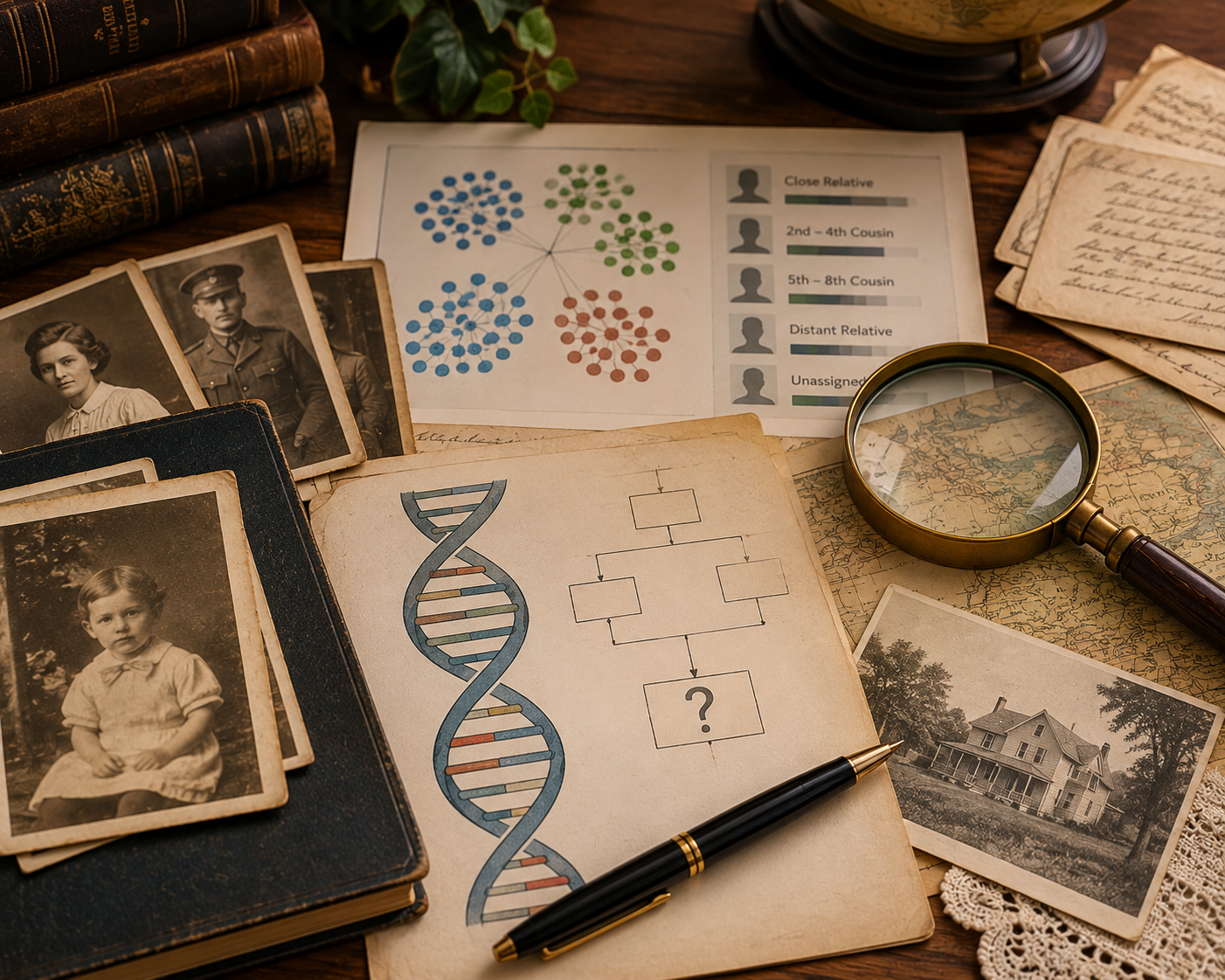
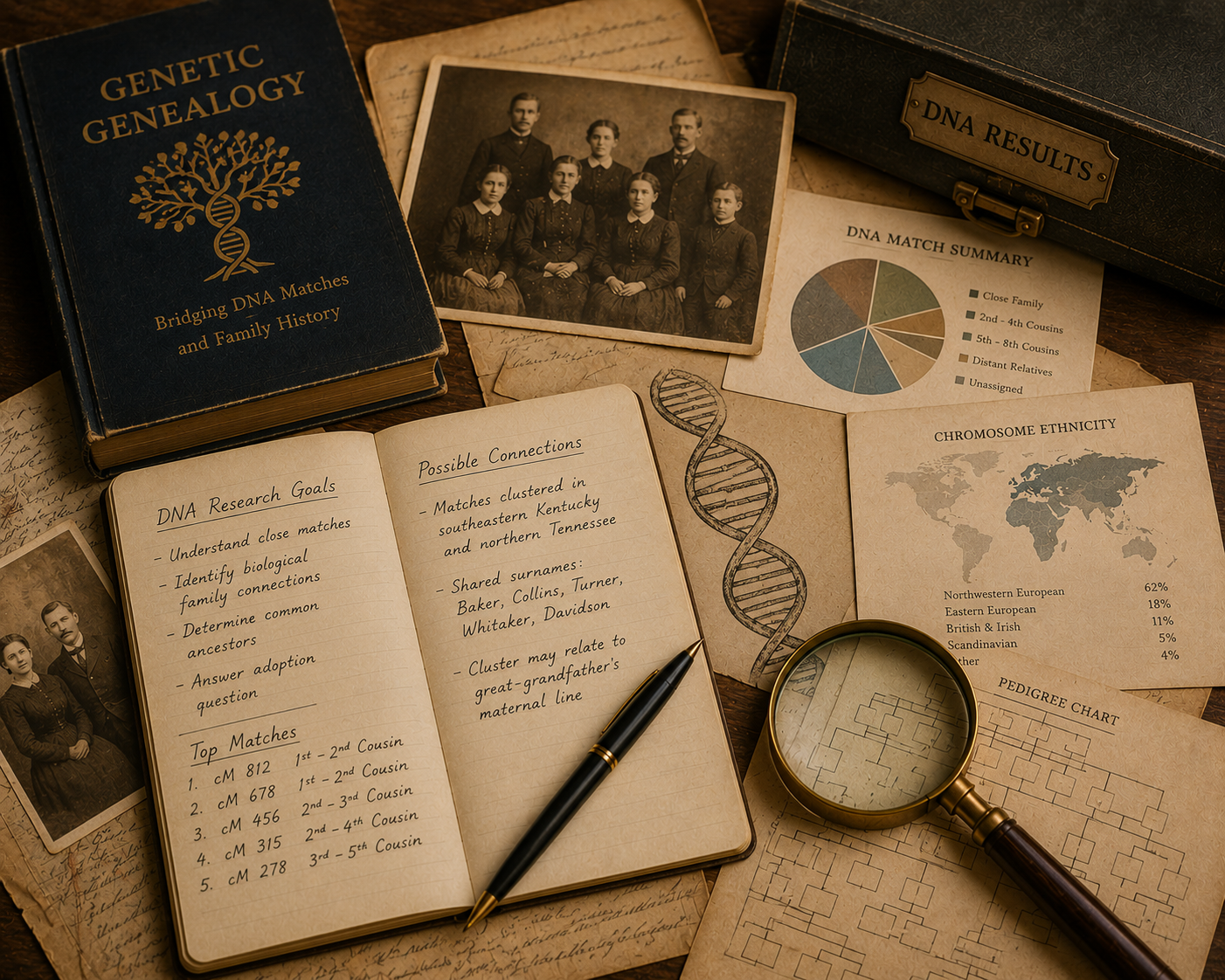
DNA testing can provide powerful evidence about family relationships, but a list of genetic matches rarely tells the whole story. Understanding those results often requires combining shared DNA, family trees, historical records, and traditional genealogical research.
Learn how DNA evidence can be analyzed alongside documentary records to identify relationships, test family-history theories, and uncover new ancestral connections.
Investigating Unknown Biological Relationships
Identifying an unknown biological parent or relative often requires combining DNA evidence with traditional genealogical research. DNA matches, shared-match patterns, family trees, vital records, obituaries, newspapers, and other sources can help reconstruct families and identify possible relationships.
Learn how genetic and documentary evidence can be analyzed together to investigate biological family connections while respecting the privacy of living individuals.
Going Beyond the Usual Genealogy Databases
Not every important genealogical record appears in a simple online search. Valuable evidence may be hidden in unindexed collections, handwritten registers, courthouse records, land and probate files, archives, historical newspapers, manuscript collections, or other less-accessible sources.
Learn how deeper record research can uncover evidence that ordinary database searches may miss and help answer difficult family-history questions.
Have a Question About Your Own Family History?
Every family is different, and sometimes the records don't provide an obvious answer. If you've reached a difficult research problem—or simply aren't sure where to begin—I can help determine the best approach.
Your initial consultation is free. Tell me what you're trying to discover and what you already know, and I'll review your research question before recommending any paid research.