

Historical Record Deep Search
Go beyond traditional name searches to uncover handwritten, unindexed, and difficult-to-find historical records.
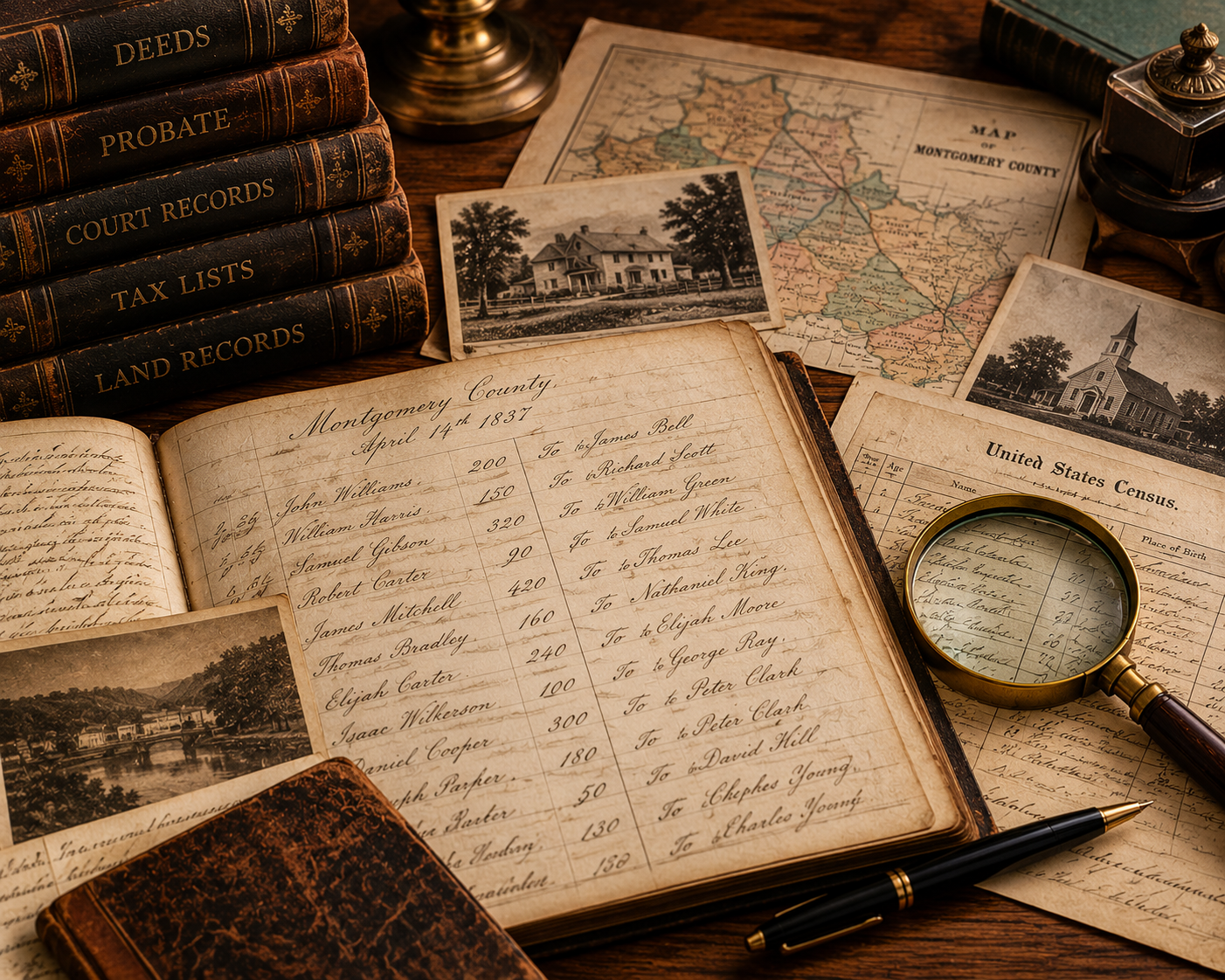
Some of the most valuable genealogical evidence cannot be found through a simple online name search. Land deeds, probate files, court records, tax lists, local records, and other historical documents may be poorly indexed, handwritten, or available only by browsing collections page by page.
This service focuses on locating and analyzing those harder-to-find records to uncover evidence about your ancestors, their property, relationships, movements, and lives that may not appear in more commonly searched sources.
What This Service Can Help You Discover
When ordinary searches stop producing answers, less-accessible historical records can reveal details that were never captured in census or vital records. These sources can help establish relationships, identify property, track movements, and uncover evidence needed to solve difficult genealogical questions.
Break Through a Research Dead End
Search beyond commonly indexed databases to locate overlooked, handwritten, unindexed, or difficult-to-search records that may contain evidence about an ancestor.
Uncover Family Relationships
Use probate files, deeds, court records, tax lists, and other historical sources to identify spouses, children, parents, heirs, neighbors, and other important family connections.
Discover More About an Ancestor’s Life
Investigate property ownership, residences, occupations, legal matters, migrations, and community connections to build a more complete picture of an ancestor’s life.
What’s Included in Your Historical Record Research
Your project begins with a specific ancestor, family, location, or research question. I identify and search the historical record collections most likely to contain relevant evidence, including sources that may require browsing, transcription, or detailed analysis.
Research
Advanced Record Searching
Targeted searches of indexed, partially indexed, handwritten, and browse-only historical record collections relevant to your research question.
Specialized Historical Records
Research may include land and property records, probate and estate files, court records, tax lists, church records, local records, and other appropriate sources.
Evidence Analysis
Records are compared and evaluated to determine what they reveal about identities, relationships, locations, events, and the specific question being investigated.
What You Receive
Historical Record Findings
A clear explanation of the records located and what they reveal about your ancestor, family, or research question.
Records & Source Citations
Copies or links to relevant records when available, along with source information documenting where the evidence was found.
Transcriptions & Written Summary
Transcriptions of difficult-to-read material when needed, plus a written explanation of the evidence, conclusions, unresolved questions, and recommended next steps.
How the Research Process Works
1
Tell Me What You’re Trying to Find
Complete the Historical Records Research Intake with the ancestor, location, time period, research question, and information or records you already have.
2
I Review Your Project
I review your research question and existing information to identify the historical record collections most likely to contain useful evidence and determine the appropriate scope of work and project cost.
3
Deep Research Begins
Once approved, I search relevant indexed, handwritten, unindexed, and browse-only collections and analyze the records for evidence related to your research question.
4
Receive Your Findings
You receive the relevant records located, source citations, transcriptions when needed, a written explanation of the evidence and conclusions, and recommended next steps when appropriate.
See What You'll Receive
Before starting your project, you can view a sample family-history research report to see how findings, records, sources, evidence, and conclusions are presented.
Ready to Dig Deeper Into the Records?
Tell me who or what you’re researching, where they lived, and what you’re trying to discover. I’ll review what you already know and determine which historical records offer the best starting point for the research